
Lyra Germanica, The Christian Life
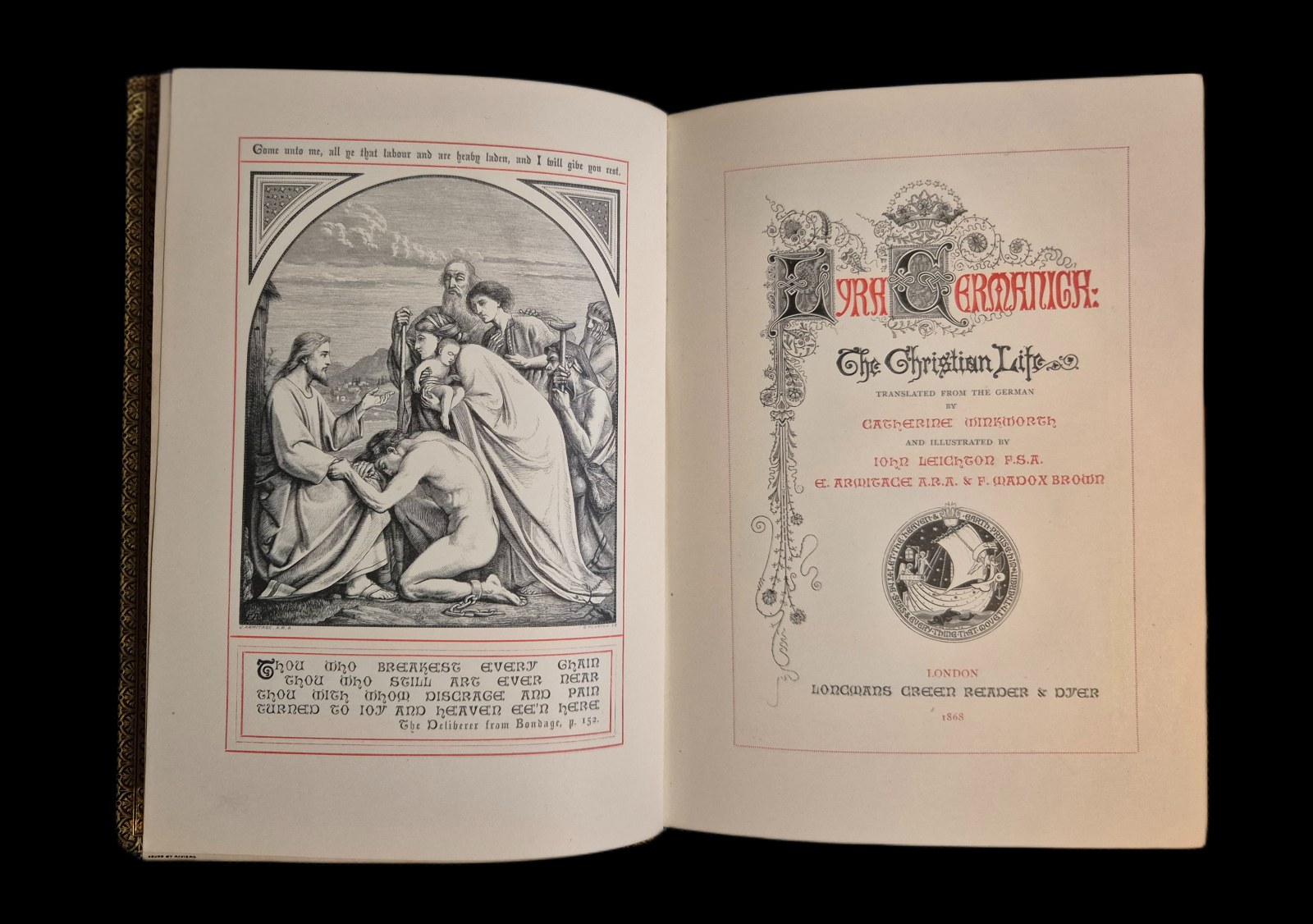
Translated from the German by Catherine Winkworth
and illustrated by John Leighton, E. Armitage & F. Madox Brown
London : Longmans, Green, Reader & Dyer, 1868
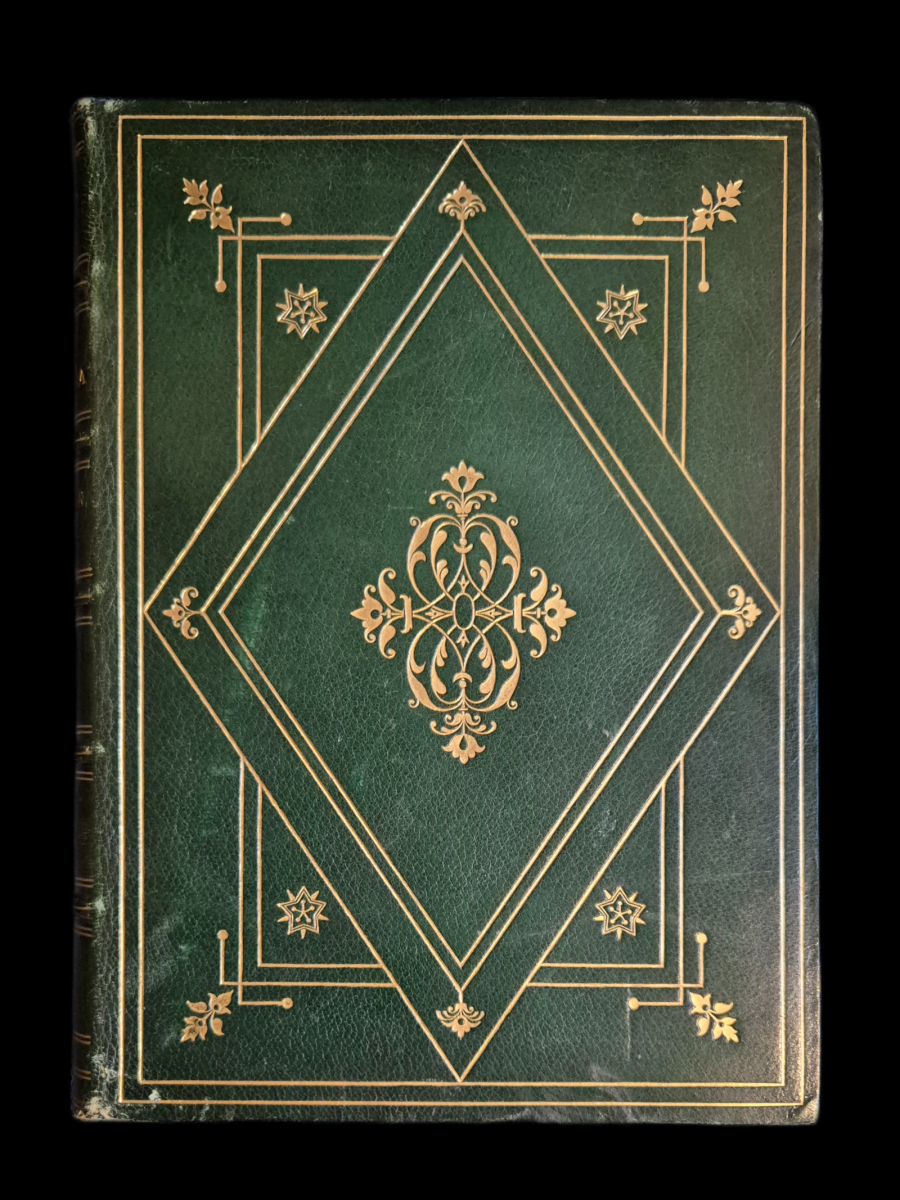
Full green Morocco, identical stamped and gilt geometric and floral designs to the front and back covers. Spine with five raised bands and gilt panels. All edges gilt. Marbled boards with gilt tooling. The cover bears no monogram, however, it was likely designed by John Leighton who designed the binding for the first, 1861 edition.
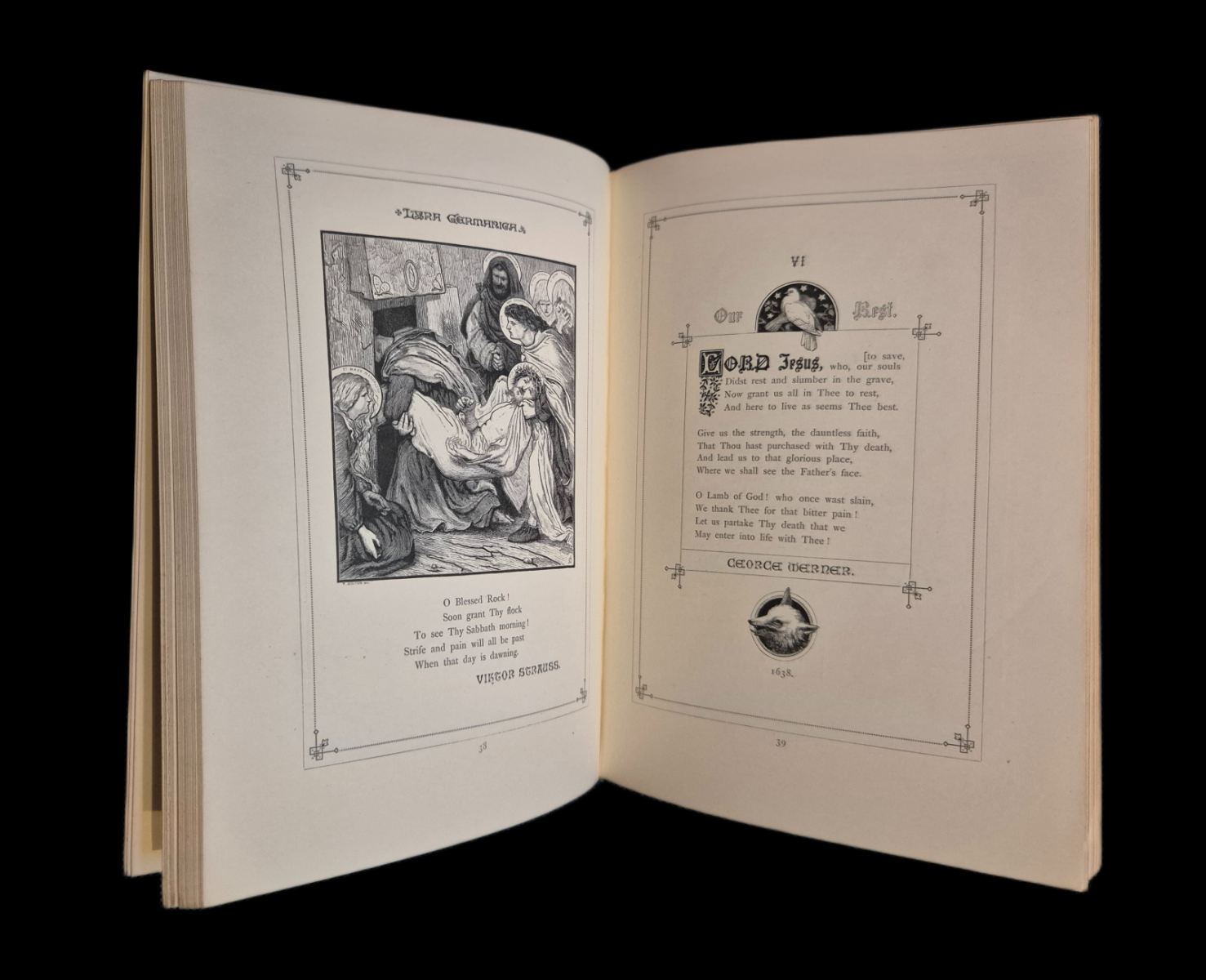
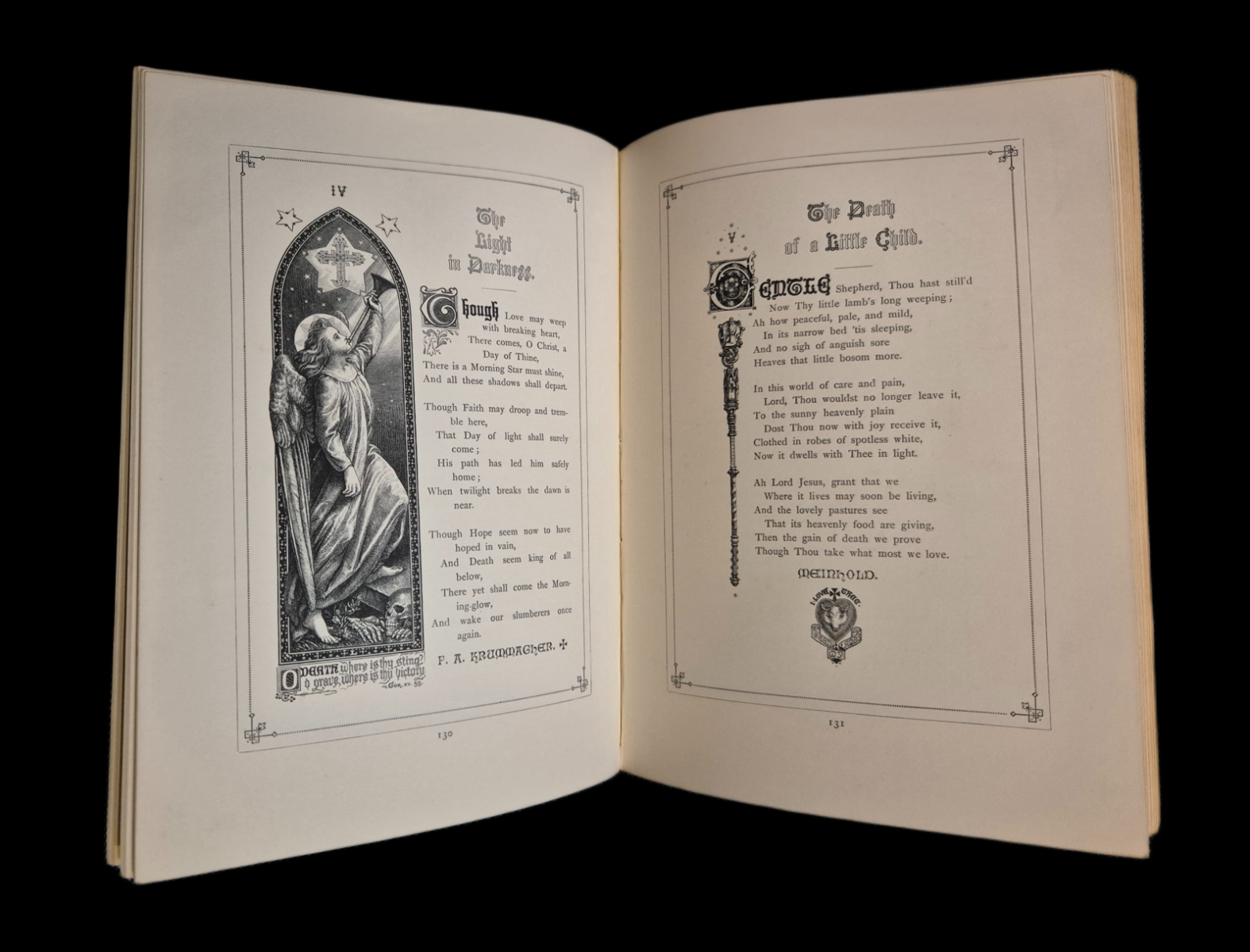
xvi, 254 pages. Text with ruled borders and decorative initial letters. Steel-engraved illustrations and vignettes throughout. Six illustrations by Armitage, three by Brown with the rest by Leighton who also designed the decorative elements throughout.
Bookplate of F.E. DuBedat on upper pastedown.
Catherine Winkworth (1827-1878) was instrumental in making German hymnody available to the English-speaking world. Born in Holborn to a family of silk merchants, Winkworth developed an interest in German hymns while living in Dresden. It was there that she began translating the traditional songs of praise.
Lyra Germanica was her most popular publication, reissued several times after its initial publication in 1861. The present edition has the fortune of being designed and illustrated by some of Victorian England’s best-known artists.
The cover is by John Leighton whose medieval inspired designs made him one of the most prolific, and celebrated, designers of book covers in England. Notably, this volume also demonstrates his considerable skill and range as an illustrator.
The book also boasts several works by eminent artist Ford Madox Brown. Brown is best known for his association with the Pre-Raphaelite Brotherhood and his tutelage of Dante Gabriel Rossetti and many women involved with the circle, including Georgiana Burne-Jones. His illustrations for the present volume, like 'At the Sepulchre', show his famed figure grouping technique, seen in his most famous painting, 'Work'.
Edward Armitage, the book's other illustrator, trained in Paris under Paul Delaroche. As a Royal Academician and Professor of Painting at the Royal Academy, Armitage was well versed in Biblical subjects. Illustrations like 'The Walk in Emmaus' show his interest in placing neo-classical figures within historical landscapes.
Winkworth herself has been described as an early feminist, working for women’s education and translating biographies of two founders of religious sisterhoods.
Provenance:
Francis Edward DuBedat ( ?-c. 1920) from the Dublin Huguenot family of financiers. The DuBedat family was one of the foremost powers in Dublin’s social circles. However, Francis’s fraudulent business dealings to finance his grand home ended him in prison. The subsequent trial and publicity is thought to have inspired George Bernard Shaw’s character Louis Dubedat in his play 'The Doctor’s Dilemma', produced in 1906.
Ref: 122166
£425.00
to order you can call the shop at +44 (0)20 7930 9223
or email us at artbooks@heneage.com